Stop Fighting the Leash Every Time You Leave
Leash training creates calm, controlled walks for dogs and owners across Knoxville
When your dog pulls hard enough to make your shoulder ache or drags you toward every passing squirrel, the walk stops being enjoyable and starts feeling like a chore. In Knoxville, where sidewalks wind through neighborhoods and trails cross busy intersections, losing control of the leash can quickly become unsafe. Justin Rigney Dog Training teaches dogs to walk beside their handler with attention and impulse control, turning the daily walk into something you can both rely on.
This training eliminates pulling and leash frustration by teaching your dog that staying close and checking in leads to forward movement, while tension on the leash means stopping. The work builds engagement so your dog pays attention to you instead of scanning for the next distraction. It reinforces calm behavior and reduces the stress that comes from constant correction and resistance.
If walks in Knoxville feel more like a struggle than a routine, start with a conversation about what you are dealing with and what the training looks like in practice.
How the Training Builds Attention and Control
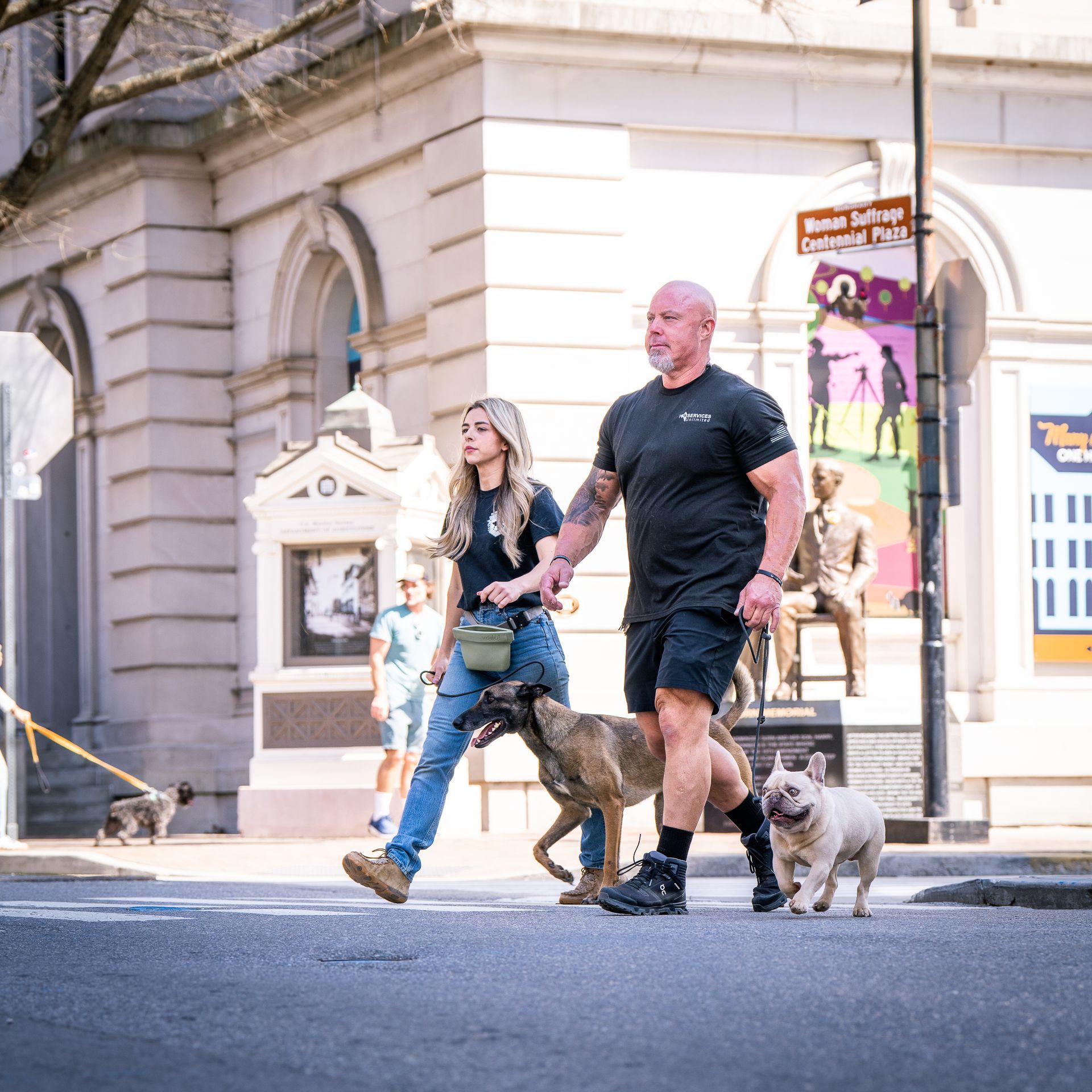
Sessions begin in low-distraction environments where your dog learns the basic position and pace, then gradually move to busier settings like parks and sidewalks in Knoxville. The trainer uses directional changes, stopping, and rewarding calm behavior to show your dog that staying close is more rewarding than pulling ahead. You learn how to hold the leash, when to correct, and how to read your dog's body language before the pulling starts.
Within a few weeks, you will notice your dog glancing back at you during the walk, maintaining slack in the leash without constant reminders, and staying focused even when another dog passes on the opposite side of the street. Justin Rigney Dog Training works with dogs of all ages and energy levels, tailoring the pace and structure to fit what your dog needs. The result is a dog that walks with you instead of against you.
This training does not teach your dog to ignore the world entirely, and some dogs will always be more alert than others. It also does not replace proper equipment, so if your dog is large or strong, a flat collar or martingale is recommended over a harness that encourages pulling.
Common Questions Before You Start the Work
If you are unsure how leash training differs from basic obedience or what to watch for as your dog improves, these answers cover the details that matter most.
What makes leash training different from just practicing at home? Leash training addresses the specific behaviors that happen during movement and distraction, not just the commands your dog knows in a quiet room.
How soon will my dog stop pulling? Most dogs show significant improvement within two to three weeks, though consistency between sessions determines how quickly the behavior becomes automatic.
Why does my dog pull more in certain areas of Knoxville? Dogs pull toward things they find rewarding, so areas with more people, wildlife, or other dogs naturally increase arousal and make impulse control harder.
What equipment is used during training? A standard six-foot leash and a flat collar or martingale provide the control needed without adding complexity or encouraging resistance.
When is the best time to start leash training? As soon as pulling becomes consistent, the longer the behavior continues without correction, the more effort it takes to reverse.
Leash training makes every walk more predictable and less exhausting. If you are tired of bracing yourself every time you clip the leash, this program gives you a clear path to calmer, more controlled outings in Knoxville.